Playing Favorites

I’m often asked by readers and interviewers which book of mine is my favorite, and it’s never an easy question to answer. To my mind, the best book will always be the one I’m writing in the moment, my previous efforts fond memories in the rearview. But this is also not entirely true. As time goes by, I realize I’m more partial to some of my books than others, whether because they exist as perfect snapshots of the kind of writer I was at the time, elevated my profile and allowed me to keep doing the thing I love, or represent a rare instance of exceeding my own expectations for a project.
So, if you’ll forgive the self-indulgence, I thought it might be fun to highlight here the definitive answer to that question, at least at this time of writing. It can also serve as a kind of introduction to those who may be unfamiliar with my work.
SOUR CANDY (2015)
One sunny Saturday morning I walked into a Walmart and was in the candy aisle when a kid started screaming. You know that kind of scream. It’s so shrill and piercing, so full of alarm, it can only come from something technological or supernatural. Alas, it was just an upset child trying to get his mother’s attention, a mother who did not at all seem inclined to give it. She stared blearily at the candy on the racks before her, completely detached, while all around them shoppers stared in irritation. Feeling a little ashamed of my own judgment of this woman and her upset son, I wondered what would happen, as a kind of karmic punishment, if I got home and the kid was there waiting for me, claiming I was his father now, and he’d altered my reality to support this claim. Thus, Sour Candy was born.

Shortly after publication, mired in the drudgery of dreaded self-promotion, I posted my cover design for the book on Twitter (remember how much fun that place was back before a certain cabbage-headed narcissist took it over?), and within minutes got a DM from none other than Ryan Turek, the director of development at Blumhouse. The message was simple: “Hi Kealan, how do I read this?” I promptly sent him a copy, and a few months later, Blumhouse officially optioned the book for the movies. Obviously, that movie never came to pass, despite, at various turns, the involvement of such heavy-hitters as Mike Flanagan & Jeff Howard, and later, Oz Perkins (who wrote the script and was slated to direct.)
Nevertheless, Sour Candy was a hit among readers, and to this day, continues to be my biggest seller. Nothing else comes close, though my novel Kin occasionally nips at its heels. It got a starred review in Publishers Weekly, was adapted (by me) into a graphic novel for none other than John Carpenter, and was also one of four novellas in the collection Guests, published by Suntup Editions, a publisher of high-end limited editions with whom I’d dreamed of working since they first appeared on the scene.

To say that Sour Candy has been good to me is a massive understatement. Since 2015, it’s paid the bills, opened innumerable doors, and as of right now, is doing the movie rounds again, this time with a screenplay I wrote myself. A production company and a director are on board and I’m up to my ears in development meetings.
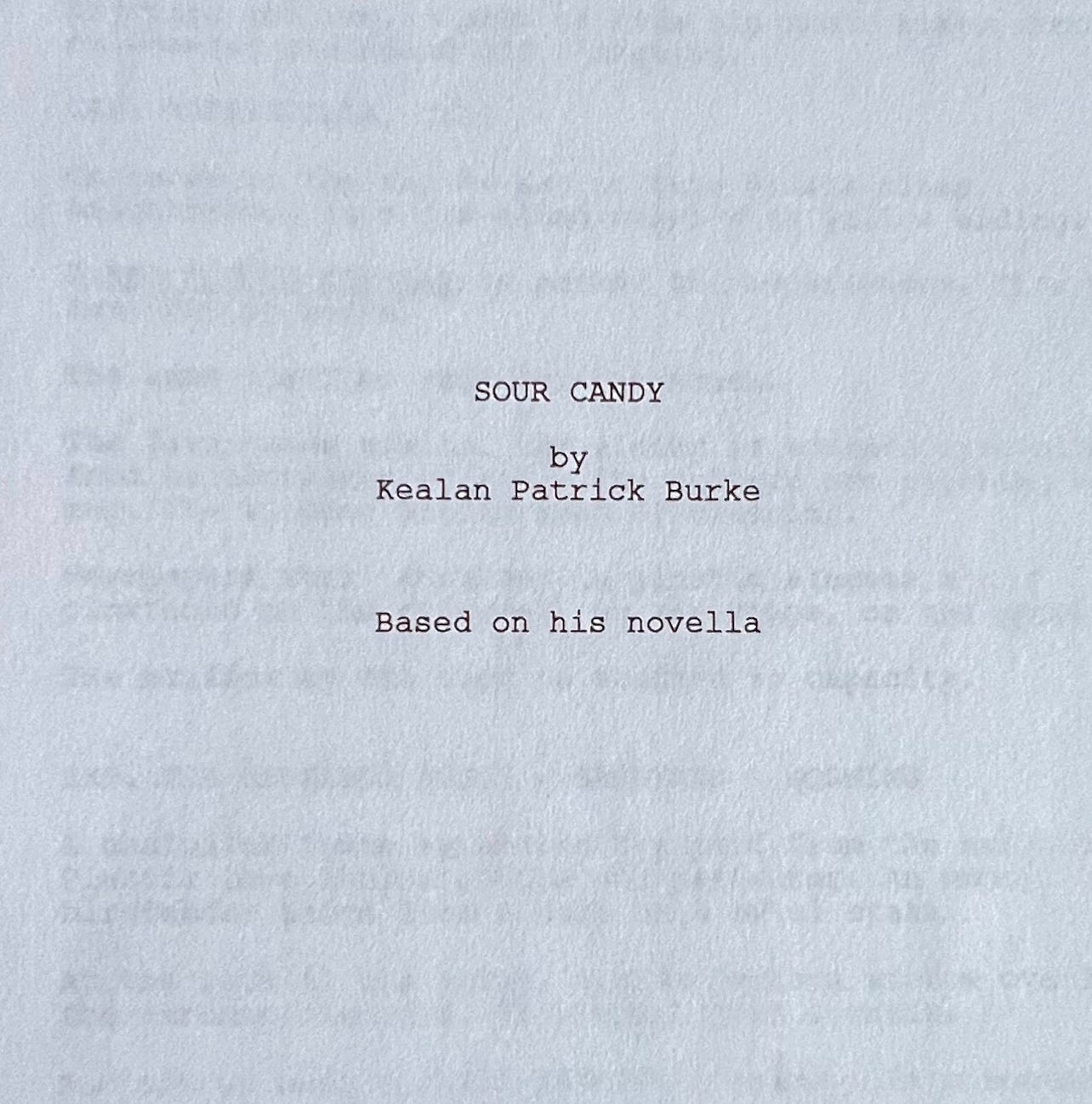
All of this from an 82-page novella I wrote in less than a week eleven years ago.
COTTONMOUTH (2025)
My Southern Gothic horror novel Kin is the bigger and arguably better book, but I hold the prequel novella Cottonmouth in higher regard for both personal and professional reasons. It was written in the wake of my father’s death from cancer, which greatly affected the tone and the motivation of some of the characters. It comes from a place of immense sadness, which in turn informs the journey of poor Jonah Merrill, who when we meet him, is enduring a catastrophic loss of his own.

Also, I’m not typically someone who immerses themselves in a ton of research beyond the bare minimum of what I need to make the story work, but Cottonmouth was different. Not only did I start writing it in a cabin in the Smoky Mountains in Tennessee—which is where the story is set—I also spent months researching Pentecostal preachers, snake handlers, tent revivals, and the effect of the Great Depression on rural communities in Appalachia. It also features one of my favorite characters to date: the disfigured transient named Horseshoe Collins, a lonely and occasionally homicidal nomad walking the roads of America in search of his father.
Cottonmouth represents some of my best writing, every word of which came from a very dark place indeed. As a result, it’s not a joyful ride, nor one I particularly want to take again, but it holds a special place in my heart because of what it meant to me at the time: not an escape from grief as much as a means of engaging with it.
THE WIDOWS OF WINDING GALE (2025)
Thank God for independent publishers, without whom, neither Widows nor the aforementioned Cottonmouth would exist. These stories were commissioned by Paul Miller of Earthling Press and Jason Sechrest at Suntup Editions, respectively, and the results are two of my favorite books.
For Widows, the publisher’s only parameter was that the book take place on Halloween, which, as a horror writer, always holds great appeal. It was also a welcome opportunity to set another story back home in Ireland. I was born and grew up in a small town called Abbeyside. The sea was less than a ten minute walk from my front door, and has always called to me, even as I while away my adulthood in landlocked Ohio. Despite writing somewhere in the region of thirty books, few of them have taken place outside of the US, so this was a great excuse to revisit my roots, and in this story of women battling ancient supernatural forces on a remote Irish island, that’s exactly what I did, while incorporating the Irish language into the proceedings and paying homage to everyone from Samuel Taylor Coleridge to John Carpenter.

The Widows of Winding Gale is one of the rare instances where the end result exceeded my own expectations for the story, primarily because at a certain point, it started writing itself and going in directions I hadn’t planned, a form of automatic writing that’s always a thrill but not always a given. I love this book because it feels very Irish, very me, and contains some of my favorite writing in years. It’s also, and this should come as no great surprise to anyone who’s read me, very sad. And despite the horrors, it’s a love story too, which I don’t indulge in often enough and very much enjoy.
The initial publication of the book benefited greatly from Paul Miller’s typically wonderful production design, absolutely gorgeous cover art and interior illustrations by my friend Glenn Chadbourne, who delivered a tapestry of maritime mystery, and a mindblowingly lovely introduction from one of my favorite writers, Nathan Ballingrud, who described the book as “...one of the best horror stories I've read in a long time.” You can’t ask for better than that.
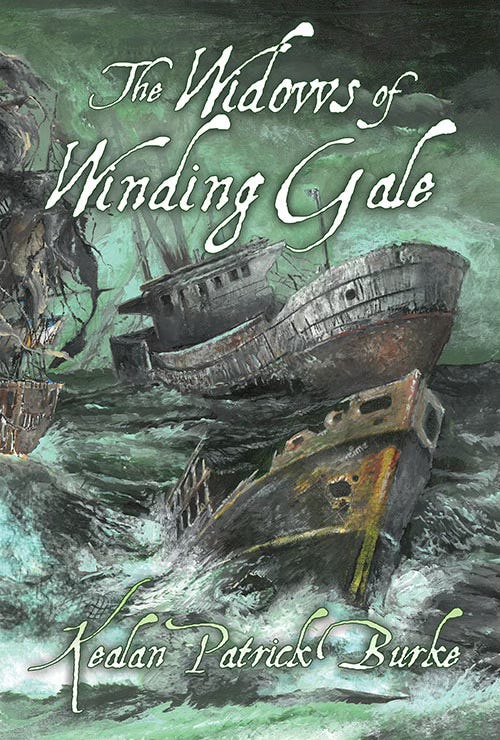
I later decided to narrate the audiobook myself, something I’d never done before, but if any book of mine demanded an Irish narrator, it was this one. That experience (in no small part thanks to the expert guidance of producer Joey Gurwin at Oranjudio here in Columbus) was incredible and has left me eager to do it again. Readers enjoyed it too, and in the end, that’s all that matters.
I’ve written a lot of short stories over the years (somewhere in the region of 200), and I like to gather them into collections whenever I can so readers who missed their initial appearances can access them in one book. They also exist as mile markers of my development as a writer. And while I would point to more recent collections like We Live Inside Your Eyes (2019) or Nerve Endings (2025) as better representations of what I can do in the short form, my favorite will always be my second collection The Number 121 to Pennsylvania & Others (2015).

As a writer, I cut my teeth on books like Night Shift by Stephen King, Blue World by Robert McCammon, Shock! by Richard Matheson, Tales from the Nightside by Charles L. Grant, Clive Barker’s Books of Blood, The Lottery & Other Stories by Shirley Jackson, In A Lonely Place by Karl Edward Wagner, The Dark Country by Dennis Etchison, Dark Carnival by Ray Bradbury, and many, many more. I’ve always adored story collections and from the beginning of my publishing journey, was very eager to someday do one. The first of these was a book called Ravenous Ghosts (2003), from the ill-fated 3F Publications, and it reads very much like it was written by a young writer who still hadn’t found his own narrative voice and was content to riff on his influences instead.
The Number 121 has its share of influences too (the most obvious being King and Matheson and Serling), but the stories are more confident, less reliant on what came before, with a measure of control that had been lacking in previous efforts. It also contains some of what are still a few of my most popular stories, like “Peekers”, “Mr. Goodnight” and “Snowmen”. Add to that, the book was published by Cemetery Dance, a bucket-list market back when I was scrabbling and struggling to amass publication credits and make a name for myself. The CD limited edition was a thing of beauty, my first chonky hardcover with a gorgeously evocative cover by James Higgins.
MASTER OF THE MOORS (2007)
If I compiled a list of my least-read books, then Master of the Moors would be at the top of it. Cited by some readers as their favorite book of mine, most have never even heard of it. I’m not sure why that is, but over the years I’ve wondered if it’s the limited appeal of the story’s milieu (the English moors in the early 1900s), the cover design (the original by Steven Gilberts was so amazing, my own covers for the subsequent paperback and digital editions couldn’t hope to match it), or simply a case of a very early book in my catalogue getting forgotten in favor of newer work.

Whatever the case, Master of the Moors represented a turning point in my publishing journey. Back in the mid-oughts, I’d been struggling to write anything longer than a novella. Midway through a novel, I’d lose all steam and abandon the project in favor of something else.
So, I came up with an idea: if I started a newsletter and posted a chapter a week of my novel-in-progress, reader/subscriber-expectation would force me to finish the book or risk letting everybody down. Enforced novel-writing, as it were. So that’s exactly what I did. I expected maybe two dozen subscribers, which would have been enough, but got hundreds, and by the end of it all, the humble newsletter morphed into something else entirely, an event rather than just a small writing exercise. In addition to my introduction of every chapter, literary heroes of mine like Ramsey Campbell, Terry Lamsley, Stephen Jones, Michael Marshall Smith and many, many more contributed essays about horror, the moors, Gothic fiction, which only heightened the appeal for readers.
And in the end, I did finish the book. The end result, a Gothic horror novel about a plague of madness, vampires and werewolves, was good, but hampered by first-novel syndrome. I later revised it for publication when Don Koish at the late, lamented Necessary Evil Press came a-calling. Nowadays, it’s everywhere, but if it’s sold a single copy in the last few years, I’m not aware of it. Part of me feels bad about that, because we always want our work to be read, but ultimately, the book will always be that pivotal stepping stone that got me to where I am. Novels are always a daunting proposition, but had Master of the Moors not pushed me past that stumbling block, who knows if I’d ever have finished one. Thus, almost two decades and seven novels later, it’s hard not to think fondly about where that journey began.
The story of the inspiration for Sour Candy is a real chuckle. Taking something quite common and turning it into your best success is a feat of the gods. It’s nice to know things like this still happen!
I’m very glad for this summary—you have been hard at it and accomplished so much in just over a decade of time. It’s inspiring to know amidst to stops and starts things do get done—and recognized.
All the best for this round of movie script. 🤞🏻Sometimes it’s better to stay in our own hands. 🍀
Sour Candy is my favorite as well. It left such an impact that I turned into your number 1 fan instantly. :) I still have to read no. 2 & 3 but Master of the Moors is now one of my favorites too. It would make for a great movie.