Mr. Lake
A Note About My Teacher

I was four years into secondary school (high school to you) and a straight-A student. My future looked bright. Then came my fifth year and an indulgence in drinking and partying, and my grades didn’t so much plummet as crash into the base of a mountain. With that came an equally abrupt introduction to depression and dark thoughts. Growing up in a time and place when guys expressing their emotions was like confessing to murder, the only avenue of expression available to me was my writing, usually via prompts from my new English teacher, a man named Mr. Lake.
Mr. Lake stood out among the faculty by virtue of his fastidiousness, impeccable grooming, and insistence on always wearing pristine suits to class. Those suits were always gray and so was his hair. He was in his late forties but so handsome and stylish, the gray complimented him, like he’d intentionally aged himself to match the suit. At first blush, he came across as a serious man, not given to humor or time-wasting, a man who wouldn’t tolerate time-wasting no more than he would a crooked tie or an errant piece of lint. When we entered his classroom on that first day, he looked us over as a commander would his troops, and found us wanting.
As per the rituals of Catholic boys’ schools, he led the class in prayer, and I remember thinking at the time, even if I couldn’t have articulated it quite as well, that he felt burdened by this ritual, as if he was obeying rules he didn’t believe in, and it rankled him. I never got any confirmation of this, but nowadays I wonder if he might have been my first real encounter with an atheist.
We were afraid of him. Most teachers wore those dreaded black Snape-capes over casual dress. He didn’t. Just that suit and tie and shoes so polished they trapped the fluorescents. For kids from a small town in Ireland, men in suits meant bill-collectors, lawyers, or government officials. Seldom anything good. And while other teachers bellowed and slapped or punched or flung students bodily out of the classrooms when they misbehaved, Mr. Lake only needed to look at you and all mischief evaporated. In the three years we had him as our teacher, he never raised his voice, never laid a hand on any of the students. If he was angry, his expression didn’t change. If we’d been familiar enough with the term “stoic” at the time, we’d have used it. Instead we nicknamed him “Terminator”, because Terminator 2 had come out a few years before and he looked a bit like Robert Patrick, a character with a similar unwillingness to show emotion. Students sometimes struggled to relate to him because there didn't seem to be much to relate to. Other teachers, for all their flaws and peccadilloes, were immediately identifiable as human. We had a robot.
Or so we thought.
As time went on, we realized the flaw in our assessment of him. Yes, he was a deadly serious teacher, 100% committed to his job, and he dressed like he worked in politics, but one day something happened that changed everything.
He laughed.
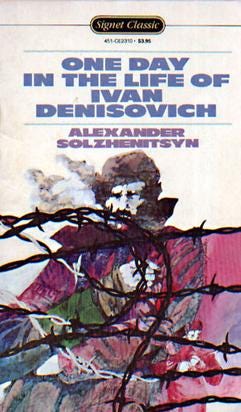
We were a couple of weeks into his class and had already realized something important: he was brilliant. Never before had we had a teacher who guided us so elegantly and meticulously through work we’d have struggled to understand or appreciate on our own. Even back before everyone had a computer and social media installed in their eyeballs, it was hard to keep the attention of hormonal teenagers on anything, never mind Solzhenitsyn’s One Day in the Life of Ivan Denisovich or Joyce’s frustratingly opaque Ulysses. Yet, somehow, he managed to get us engaged, invested, and our assignments stopped feeling so Sisyphean and boring. I began to get excited for his class, never more than when he gave us books to read or essays to write.
One day, while each student took turns reading aloud a chapter from whichever book we were studying, one of them stopped, eyes like boiled eggs, skin the color of a beet, mortified. Mr. Lake looked at him and said nothing. The rest of us glanced down at the line upon which our classmate had gotten snagged, and that’s when the giggles infected the class. Seems ridiculous now of course, and I forget the exact line, but it was something like: “‘How dare you offend me so!’ he ejaculated.’” As relative newbies to pre-20th (or possibly 19th!) Century fiction, this struck us as hilarious in much the same immature way the word “penis” did during sex-ed. But we couldn’t stop, even as we waited for Mr. Lake to glare the hilarity out of us. But he didn’t. Much to our surprise, he smiled, stood back against the lectern, crossed his arms and said, “He must have been very excited.” And we fucking lost it. So did he.
That broke whatever unspoken tension existed between student and teacher. It humanized him, and things were different after that. Up until then we’d admired him, feared him, respected him, but had never thought of him as anything but a rigid installation of the education apparatchik. He smiled more often, laughed every now and again, and in the thirty-odd years since then, it never once occurred to me that maybe he had stuff going on when we first met him that made laughter harder to come by. Because nothing really humanizes teachers for us as kids, does it, no matter their disposition. Seldom do teachers exist or have real lives outside of the classroom when you’re young. You see one during summer vacation and your first thought is “how did they escape?”
And then came the drinking and the depression and the brawling, which saw me rapidly become someone else. Prior to this, I was the quick-witted type, not quite class-clown, but certainty willing to wear the costume. Now, I was thin, broody, pale, and struggling to hide the scars on my arms. Grunge music had been written specifically for me, I thought, and I needed to be even more morose and dress accordingly. My attention began to falter and so did my grades. And Mr. Lake noticed. During the next parent-teacher conference, he told my mother I was his best student and he hated to see the decline. As miserable as I was later at home with my mother castigating me, all I could think was: “Best student?” Had he really said that?
When things didn’t improve that year, Mr. Lake called me into his office after class. I reverted to surly mode, anticipating the lecture. I didn’t get one. Instead, he asked me what was going on, where I got the scars, how did I feel? And the answer I gave him still makes me cringe. How did I feel? “Like King Lear,” I told him, referencing the play we were studying at the time. “On the edge of that fucking cliff.” He didn’t talk to me like some troubled kid that day. He spoke to me as an equal, and then gave me a private assignment.
“Go home,” he said. “You like horror stories and you’re very good at them. So write one about what you’re going through.”
And after much dithering, that’s what I did. Mr. Lake not only adored it—as fucked up and gory as it was—he made me read it to the class and then take questions afterward on how to construct a story, a bizarre development which resulted in questions like: “How could a cat swallow a whole human head?” There was a very real danger that getting singled out like that would have painted a target on my back, and maybe in any other class, with any other teacher, that would have been the end result. But even kids in that class who didn’t like me respected Mr. Lake. If he’d chosen me for this dubious honor, then clearly it meant something.
Something changed within me after that day. Not some miracle cure for the adolescent horrors, but a vent when the buildup threatened to end me. I began to crave essay assignments, and every single one of them came back with an A+ and a note at the end, my favorite of which altered the course of my life.
Mr. Lake always gave us a choice of creative writing prompts, which he would write on the chalkboard. One Friday afternoon, right before the bell rang, I chose “Gossip.” I spent that entire weekend writing a story about a neighborhood in which the worst gossipers start getting knocked off by a mystery killer. It was grim and gory and funny as hell. I’d never written anything quite like it. On Monday morning, I handed it in. On Friday afternoon, I got it back. Written in his familiarly elegant handwriting was the following message:
“A++ Another triumph, Kealan. Well done. Your narrative voice and dialogue are remarkable. Some day in the future, and I doubt it will be very far, you’re going to be a famous writer and I’ll be able to say I knew you. Keep at it.”
I’m not ashamed to admit I shed a tear at that, as I did again just now while writing it down.
I’m a writer because of my mother, and an author because of Mr. Lake.
Long after I graduated and departed Ireland for the US, we kept in touch. I sent him all my books as they were published, including the one dedicated to him and my father because for a time, their roles were indistinguishable.
Mr. Lake remained a close friend over the years. In one of his last emails to me, he asked if, next time I visited home, I’d consider being a guest speaker for his class. I was delighted and wholeheartedly promised to do so.
Sadly, he passed away before I got the chance, but every word I’ve written since high school I owe in part to his mentorship, his interest in me, his encouragement, and his character. He never turned his nose up at the genre in which I chose to write, never tried to steer me into more “respectable” fields or endeavors. He just saw a troubled kid with some nascent talent and reasoned that if I was so committed to spending all my time inside my own head, I might as well bring a pen and paper with me.
When he saw my reaction that day to the notes he’d left on “Gossip”, he smiled.
I hope he’s smiling still.
Thanks Tony.
________________________
If you’d like to help support underfunded classrooms in your area, please click on the following link to donate.
Beautiful remembrance. 🫂
What a beautiful tribute!