ATTABOY
A short story

ATTABOY
by
Kealan Patrick Burke
“In grief, we are children kept from the sun, drowned by the night and glared at by a million stars that do not know our names.”
* * *
Three days after they buried my father, I started looking into the process of digging him up. I assumed it wouldn’t be easy, and I was right. Application forms, licenses, local ministries and burial authorities. Red tape, in other words, all of which would lead to nothing when I explained my reasons for wanting him exhumed. They wouldn’t understand. Nobody would, and I didn’t expect them to. I suppose I could have lied on the forms, told them it was for reasons genealogical in nature and not because I’d heard something inside the coffin as they were lowering it into the ground, but I couldn’t summon the energy required to endure however long the bureaucratic process would take because by then, it might be too late to—
To what, Weston?
I don’t want to say the words “save him” because in the absence of a cure for cancer, death had already facilitated his salvation. No, my concerns were more about the preservation of memory, and to a lesser extent, his corpse, an equally futile endeavor given the ambivalence of inexorable decay. I realize now as I write these words, that little of it makes any sense, so perhaps I should explain.
* * *
If you’ve ever lost someone—and let’s face it, everybody has—then you know what funerals are like, and I don’t need to rehash the misery of that caliginous experience for you here. It’s an exercise in rote recitation and solemnity, presided over by a sky that has never seemed more uncaring. My mother stood next to me, so thin and frail, her black dress made her indistinguishable from the palsied trees behind her. Her face was downcast, but less grief-stricken than disappointed, as if she might once have believed in immortality only to find out she’d been swindled. She divorced my father when I was ten, had spent the intervening years with nothing good to say about him, and now at his graveside, seemed to take his passing as one last insult, his way of having the final word at her expense. I’ll never claim to understand their dynamic. I only remember a lot of yelling when I was young, and then one day my father clomped down the stairs with rolled-up sleeves, face hard with anger, and a suitcase in each hand. He stopped when he saw me and I saw minnows of pain flicker in his eyes, sending water shimmering to the surface. “Sorry, kid,” he said, and that was that. No hand on the shoulder, and no hug, because when it came to intimacy, we’d never graduated beyond “attaboy.”
For six weeks after that, I held vigil at my bedroom window, looking for some sign of him pulling into our neighborhood, my heart jolting every time I saw a vehicle that looked even remotely like his blue Honda Civic, until, in an act of delayed mercy, my mother told me he wasn’t coming back. I don’t recall the rest of the conversation because it didn’t matter. My father had been absented from my life. All that was left was for my ten-year-old brain to process it however it saw fit. Counseling wasn’t an option back then, not in a close-knit town so fueled by gossip and judgment, needing therapy summoned ableist specters of asylums and levied shame upon those who’d sent you there. You were allowed to be broken and in pain. You just weren’t allowed to show it. Or talk about it. Thus, like many kids of my generation, I bottled it up and watched with morose detachment as those feelings systematically set about destroying my life.
By 12, I was in trouble at school.
By 15, I was in trouble with the police.
By 18, I was in jail, a result of my tendency to seek out undesirable bars, find the biggest guy there, and antagonize him until he beat me to a pulp. Which was, of course, the point. I sought punishment, enough physical abuse that it would cancel out the emotional suffering for a while, that endless persecution of my brain that had long ago concluded that my parents’ dissolution was my fault, and mine alone.
The night after my 21st birthday, I was in rehab for drug and alcohol addiction, something I still struggle with despite twelve years of sobriety. Those demons never leave you, they just lie dormant for a while, like an old acquaintance who specializes in making you feel better but whose company you don’t particularly enjoy.
I never blamed my parents for any of this. Perhaps I should have, or at least confronted them about it all, but the kind of people they are—mother, prone to flying off the handle at the slightest provocation, and a father so stoic, it probably took more than the usual time to confirm he was in fact dead and not just being typically inscrutable—would have accomplished little and made things even more strained between us.
And for the past few years, I saw very little of them both, choosing instead to distance myself from the source of my anguish. This was probably unfair, because the easiest people to blame are those most disinclined to defend themselves. Doesn’t change the fact that being away from them was the only way to quiet the war.
My father’s first flirtation with throat cancer brought us together. Despite my feeling that he had an equal share of the blame for not initiating some kind of resolution between us, for not trying harder to maintain a relationship, it was a civil affair because when faced with the threat of death, old grievances tend to die first. He was remarkably cheerful considering the diagnosis and his battle with it was remarkable to behold, calling on reserves of strength I didn’t know he had in him. In the end, after an interminable dance with chemo which thinned his hair and grayed him while adding new gravel to his voice, he emerged victorious. Though my mother had visited him once or twice in the hospital, she went back to hating him the moment she knew he was fine. Often, I wonder if they still loved each other and just became adept at hiding it, even from themselves. Sometimes I wonder if they ever did. After all, their marriage was motivated less by love than the Catholic church’s disdain for pre-marital pregnancy.
After my father was back on his feet, I left Hartford and returned to my life in New York.
He was cancer-free for three years.
The next round killed him, and it happened fast, as if the cancer, driven by revenge, worked as quickly as it could to avoid the same fate as its predecessor. The process from detection to expiration was less than a month.
I didn’t get to say goodbye, and when I did, it emerged as a broken whisper over his grave as I watched it descend into the earth.
“At least he’s at peace now,” my mother said, with a sad shake of her head I was sure was for my benefit.
The priest made the sign of the cross over the grave and that was that. Mourners began to drift away, navigating their way through the field of crosses, driven by the innate desire to be back among the living. My mother stayed with me until we were the only ones there, then she gave my arm a gentle squeeze and told me she was cold. “I’ll wait for you in the car.”
I did not watch her go. Instead, I stared down at the handsome coffin festooned with flowers and tried not to torture myself by acknowledging that today, they had buried a stranger. It shouldn’t have hurt. I shouldn’t have been destroyed.
But I was.
And then I heard it.
Treep. Treep. Treep.
At first, I thought it was the urgent trill of a cell phone. Had they buried him with it like the guy in that Netflix movie who uses it to text the boy who mourns him? I stepped closer to the grave, ignoring the awful gravitational pull of the hole, as if it wanted to suck me in, whereupon the nearby pile of dirt would somehow topple and bury me down there with my father, thereby forcing an intimacy we’d never had in life. I leaned over, heart thudding like a windblown door in a storm, and turned my good ear to the grave.
Treep. Treep. Treep.
I straightened, my throat closing around a slow exhalation of confused horror and aggravated grief.
No, not a phone.
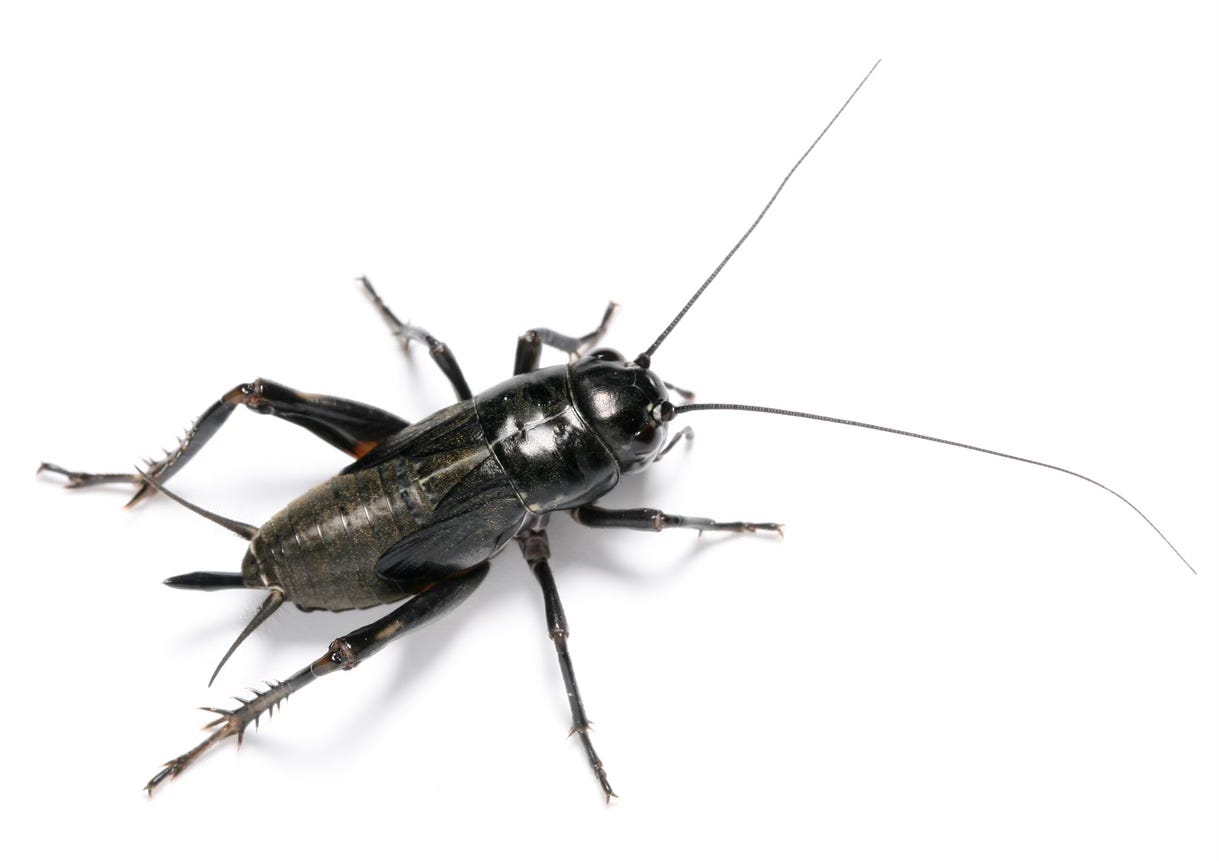
A cricket.
I stumbled back from the grave before it could claim me, and still I heard that damnable sound—treep, treep, treep—and then my legs gave way and I was sitting on my ass in the wet grass, body shaking so hard it was as if my bones wanted to be free of me.
And in the thrall of this terror, a trickle of memory breached the wall of my defenses.
I choked on tears.
I choked on laughter.
And suddenly I was 8 again.
* * *
The closest I’ve ever had to a nickname—in part because my name doesn’t lend itself well to one, but mostly because I’ve never had enough friends to whom such responsibilities might have fallen—is the abbreviation of my name from Weston to Wes. My father, who had a surplus of friends, the kind of guy who not only knew all our neighbors, but regularly conversed with them and often helped them with their various home projects, was better known as “Magnum”, due to his resemblance to the actor Tom Selleck, who played the titular detective in the original Magnum P.I. TV show. While he wouldn’t be caught dead in an Aloha shirt, his curly brown hair and bushy mustache more than justified the moniker. As a result, watching Magnum on TV became a kind of weekly ritual for us.
And it was during the airing of an episode in which Magnum contends with a psychic who has foreseen her own death, that we heard the cricket.
